
Tuberculosis is the ninth leading cause of death worldwide and a leading cause from a single infectious agent, ranking above HIV/AIDs. Kenya remains a high burden country for both TB, MDR TB and HIV with TB ranking fourth cause of death among infectious diseases.
Kenya is among the 14 countries globally that are in all the three lists of high burden countries for TB, TB/HIV and MDR-TB. Kenya conducted its first post-independence TB prevalence survey in 2015-2016. The survey revealing that the true burden of TB in Kenya was 426 cases per 100,000 population. NTLD-Program asserts that with this burden, it is estimated that 169,000 persons fall ill with TB every year, yet only about 80,000 are notified annually. Taita Taveta county is characterized by low TB treatment success rate of below 88%, high poverty prevalence of more than 45%, high HIV prevalence in general population of more than 5%, low community case notification of less than 9% of total TB cases and low pediatric case notification of less than 8% of the total cases.Therefore, concerted efforts must be put in place to ensure that strategies towards early identification and treatment initiation is in place to close the gap. Blue Cross’ through the TB project is supporting Taita Taveta County in closing this gap. The project is implemented with funding from Global Fund through AMREF Health Africa in Kenya. The project aims at supporting and strengthening the capacity of Taita Taveta County government and the local communities to be able to own up and strengthen the tuberculosis care and prevention strategies putting into consideration the TB/HIV collaborative interventions. The project is managed by a Project Officer, based in Taita Taveta County.
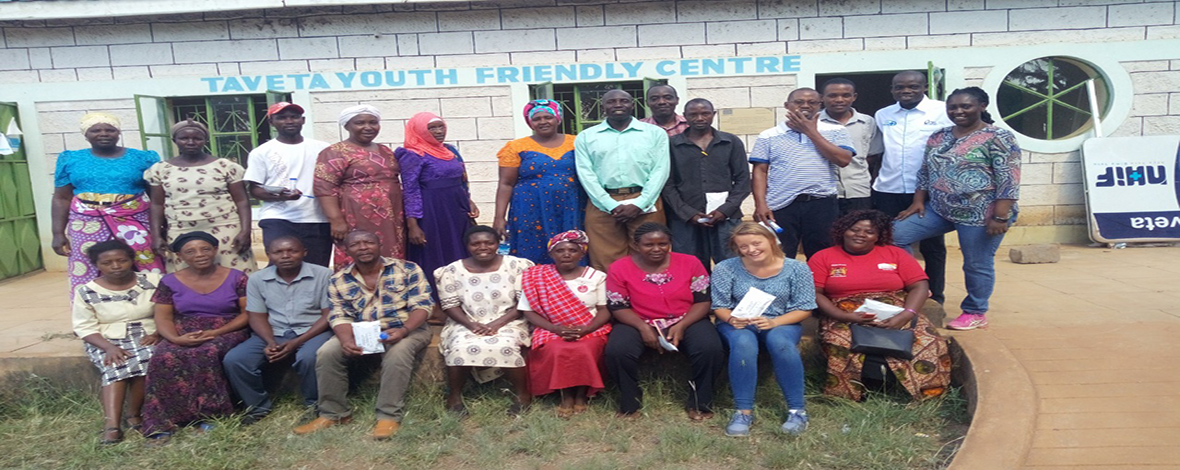
Through the GFTB project, Blue Cross actively and directly facilitates the National TB, Leprosy and Lung Disease Program’s strategy on ending TB by building the capacity of Health Care Workers (HCWs) and various community structures on community TB care & prevention, TB/HIV and MDR-TB. The trained CHVs are engaged in intensifying TB active contact investigation, facilitating tracing of patients who interrupt TB treatment and, promoting community TB prevention strategies, among other TB/HIV activities. HCWs on the other hand are involved in promoting facility-basedTB active case finding.
In order to intensify the fight against TB, we have engaged 3 linkage assistants in three high-volume facilities in the county. The linkage assistants offer TB health education while identifying coughers in ques at various health facility service delivery points (SDPs) and referring them to the relevant department for further investigations and diagnosis.
Similarly, we are supporting the county in laboratory networking for sputum samples through the engagement of 10 riders. In all our endeavors, CTLC and the SCTLCs provide guidance and supervisory roles including dissemination of the new updates in relation to TB care to the health care workers and are therefore engaged in all stages of project implementation.