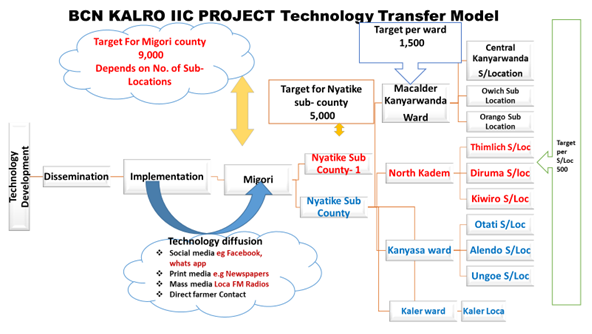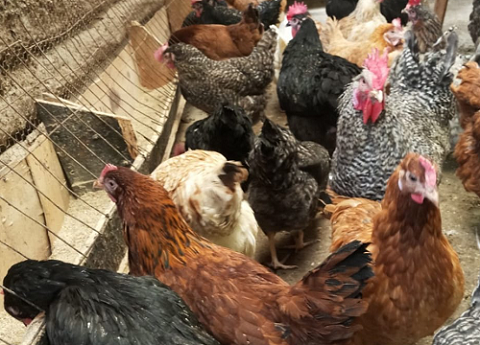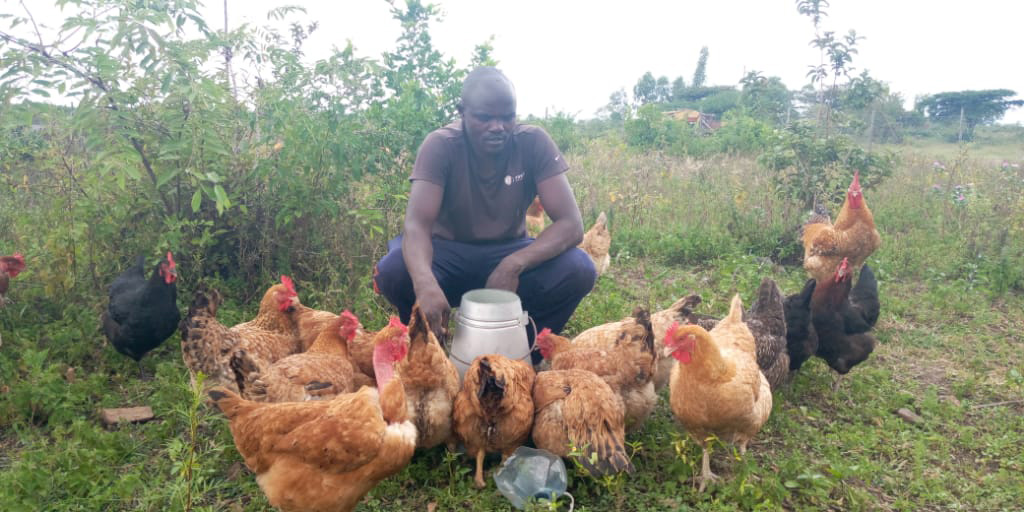
Chicken farming is a key contributor to the local economy as well as food security and household income. Indigenous chicken production play a significant role in the economic and social life of resource-poor households of Migori and Homa Bay Counties, contributing to cheap source of animal proteins and cash income and and has been recognized as an exit strategy in addressing poverty menace among the poor households.
Kuku kienyeji has found its way into the menu of almost all restaurants and high-end hotels in Kenya and beyond because of their lean and tasty meat and eggs and are considered organic (health characteristics) this has raised the demand for Indigenous chicken (Kuku za kienyeji) meat and eggs which is an indicator of their great potential in generating higher income for the rural households where majority keep local chicken.However, inspite of the high demand for kuku za Kienyeji products, the production has stagnated in recent years, largely due to numerous constraints .
And in order to address the numerous challenges facing Indigenous chicken farming in Migori and Homa bay Counties, Blue Cross in partnership with KALRO and County Governments of Migori and Homa bay Counties , aims to transform indigenous chicken farming in the two counties into a profitable, commercially oriented and nationally and regionally competitive economic activity through promotion of improved genotype Kienyeji chicken known as KALRO Improved Indigenous Chicken.The KALRO Improved Indigenous chicken breed are Fast Maturing, Easy to maintain , highly disease resistant, can withstand harsh environmental conditions, has tasty meat as well as yellow yolk eggs and they also does well when left to scavenge with ability to lay 220-280 eggs in a year, which is double the yield capacity of ordinary indigenous chicken which only produces 30-75 eggs in a year.
Statistics from the National Farmers Information System (NFIS) indicate that an egg from indigenous chicken retails for Sh25-30 compared to those from hybrid layers which trade for Sh12-15 per egg. A 3kg indigenous chicken, according to NFIS retails for Sh600-800 with the price likely to be higher in major cities like Nairobi, Mombasa and Nakuru. This breed enters the Kenya market at the time the country is witnessing high market prices for indigenous chicken product. Currently, an egg from Improved kienyeji chicken retails for Sh25-30 compared to those from hybrid layers which retails for Sh12-15.